How to Know You're Playing the Real Thing — and What the Numbers Actually Mean
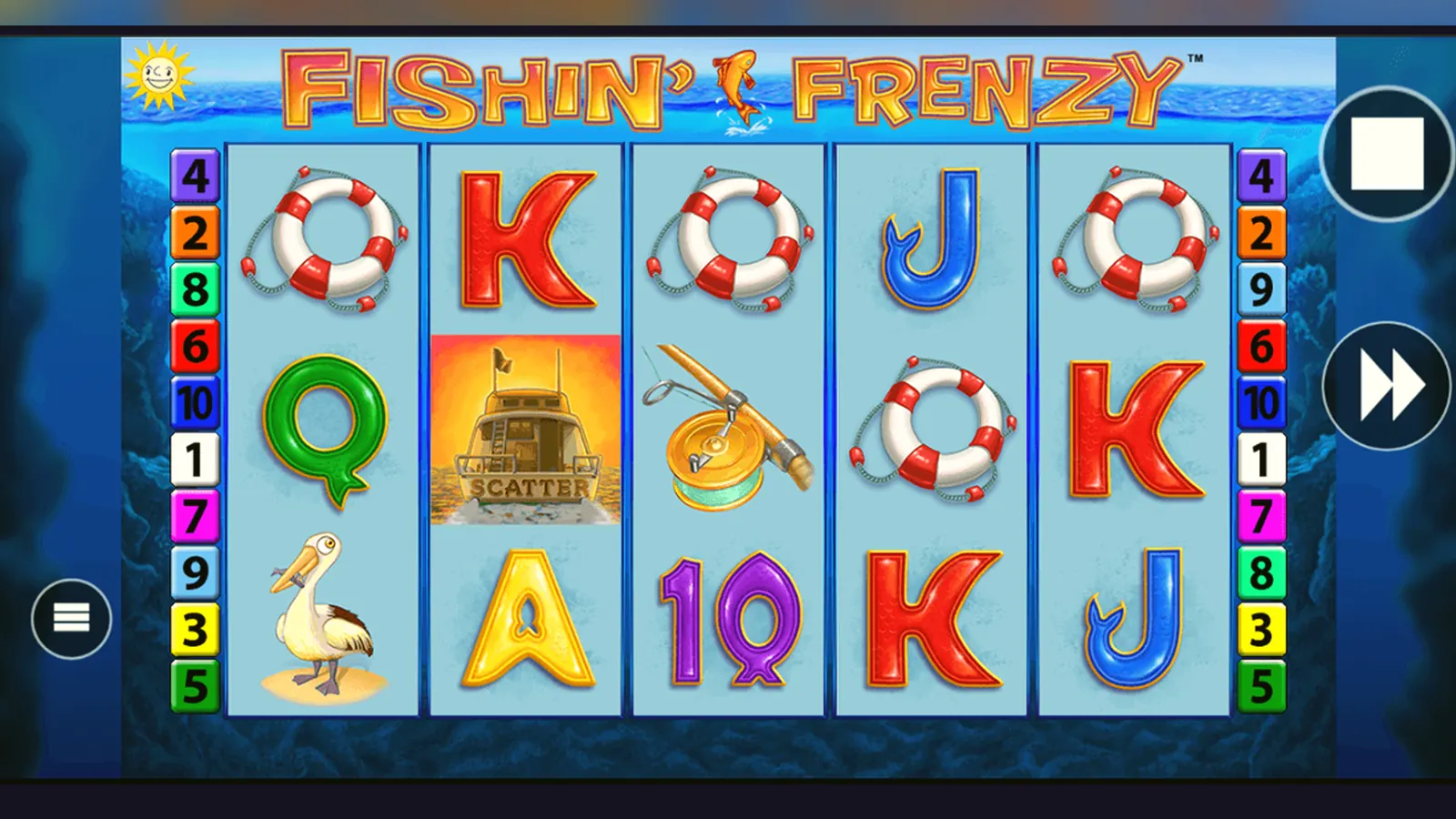
Most players who think they've lost money on Fishin' Frenzy weren't actually playing it. They were on a reskin — same cartoon fisherman, same buoys, different maths underneath. The difference costs you: clones often strip the bonus frequency or drop the RTP by two or three percentage points, then rely on you not checking.
The original comes from Blueprint Gaming, certified in 2014 and still running on every UKGC-licensed site that carries Blueprint's catalogue. It has a published RTP, a max win ceiling, and a volatility rating you can look up before you stake a penny. Clones don't. Here's how the certified version actually works, what the risk profile looks like from your seat, and the ten-second check that tells you whether the game in front of you is the real one or not.
Who Made It and How the Certification Works
Blueprint Gaming — a UK studio now owned by the Gauselmann Group — launched Fishin' Frenzy in 2014. The game holds certification from independent test houses (usually GLI or iTech Labs for the maths, eCOGRA for fair play), and every operator serving British players must hold a UKGC remote licence to host it. The licence number sits in the footer of the site; you can cross-check it in the UKGC public register to confirm the operator is legal.
Certification covers three things: the RNG can't be predicted or manipulated, the published RTP matches the actual payout over the long run, and the game can't alter its behaviour based on your balance or bet size. Blueprint submits the source code and maths model; the lab runs millions of simulated spins and signs off if the results fall within tolerance. That certificate stays valid until Blueprint changes the code, at which point the game is re-tested.
What a Round Looks Like From Your Seat
You pick a stake between £0.10 and £5.00 per spin (£2.00 if you're under 25 — the UKGC's age-based cap applies across all slots). Press spin, and five reels of three rows each drop symbols: low-value playing cards, mid-value tackle boxes and rods, high-value fish. The fisherman is wild and substitutes for everything except the scatter.
Land three or more scatter buoys anywhere on the reels, and you trigger ten free spins. During the bonus, any fish symbol that lands collects a prize — the fisherman doesn't need to be on the same reel. The fisherman wild appears only on reels two, three, and four in both base game and bonus. That's the entire mechanic: no cascades, no multipliers, no progressive feature. You're waiting for the scatter trigger, then hoping fish symbols land during those ten spins.
The game stops when your balance hits zero or you close it. There's no auto-cashout, no forced break. UKGC sites must show a reality check after an hour of continuous play, and most will block further deposits once you hit your monthly limit — usually flagged through affordability checks from £150 net deposits onward.
The Real Numbers: RTP, Volatility, and Where You Lose
RTP of 96.00% means the game is designed to return £96.00 for every £100.00 wagered over millions of spins. Your individual session will deviate wildly — medium-high volatility means long stretches of small wins or dead spins, punctuated by occasional bonus rounds that recover part of your outlay. The 22% hit frequency tells you roughly one in five spins pays something, but most of those wins are smaller than your stake.
The bonus triggers once every 180 spins on average. At £1.00 per spin, you'll stake £180.00 waiting for it. The bonus itself pays 10× to 500× your stake most of the time; the 5,000× max requires every fish symbol to land across all ten free spins, which is exceptionally rare. Volatility means you can easily burn through £50.00 without seeing a bonus, then hit two in quick succession that return £30.00 combined. The maths averages out over the long run; your session sits somewhere along that curve.
Clones, Reskins, and How They Differ
Dozens of studios have copied the Fishin' Frenzy theme: cartoon fisherman, buoy scatters, fish-collecting bonus. Most change the name slightly — Fishing Frenzy, Fish Frenzy, Fishin' Fever — but keep the visual style close enough that casual players assume it's the same game. It isn't. The maths, RTP, and bonus frequency are set by the new provider, and most clones run at 94% RTP or lower. Some drop the bonus trigger rate to 1 in 250 spins; others cap the max win at 1,000× instead of 5,000×.
A few clones are transparent about the changes and publish their own tech sheets. Most aren't. Unlicensed sites often run clones with no certification at all — no test house report, no regulatory oversight, no way to verify the stated RTP matches reality. The visual similarity is deliberate: it trades on Blueprint's brand recognition while delivering worse odds.
- Lower RTP — often 94% or 92%, sometimes undisclosed
- Reduced max win — 1,000× to 2,500× instead of 5,000×
- Slower bonus trigger — 1 in 250+ spins instead of 1 in 180
- Different reel layouts — some clones use 4×5 or 3×3 grids
- No certification — common on unlicensed or offshore sites
Blueprint has no legal relationship with these games. If you're playing a clone and the RNG fails or a win doesn't pay, you have no recourse — the operator isn't bound by UKGC rules if they're unlicensed, and Blueprint won't intervene because it's not their software.
Ten-Second Check: Are You on the Original?
- Open the game and look for the Blueprint Gaming logo — top corner or loading screen.
- Check the paytable: max win should read 5,000× your stake.
- Look at the footer of the casino site: UKGC licence number must be visible.
- Cross-check that licence number in the UKGC public register — it takes thirty seconds.
- Confirm the RTP: 96.00% for the original. Anything lower is either a clone or a low-RTP variant Blueprint licensed to a specific operator.
If any of those checks fail — no Blueprint logo, missing licence, RTP below 96% — you're on a clone or an unlicensed site. Close the game and move on. Playing an uncertified version means you have no guarantee the maths work as claimed, no regulatory protection if a dispute arises, and no access to GAMSTOP or affordability safeguards.
Where UK Players Can Run the Original
The certified 96% version runs on most UKGC-licensed sites that carry Blueprint's catalogue: Bet365, William Hill, Ladbrokes, Grosvenor, Sky Betting & Gaming brands, and several dozen smaller operators. Demo play is common, but many sites restrict free spins to logged-in, age-verified accounts — you'll need to register and pass identity checks before the demo unlocks.
Real-money play requires a debit card, PayPal, Apple Pay, or Open Banking deposit — credit cards have been banned for gambling since 2020, and the payment method must be in your own name. Stake caps of £5.00 per spin (£2.00 if you're 18–24) apply automatically. Affordability checks start from £150.00 net deposits per month, using credit-reference data at the first stage. If you're over the threshold, the operator will ask for payslips or bank statements before you can deposit further.
| Site type | Stake cap | Withdrawal speed | KYC timing | |
|---|---|---|---|---|
| UKGC-licensed | £5.00 (£2.00 under 25) | Same day to 3 days | Before first withdrawal | → |
| Unlicensed offshore | No cap (high risk) | Variable, often delayed | Often skipped or minimal | → |
Withdrawals via e-wallets clear in a few hours to 24 hours; Faster Payments to a UK bank account take the same day to two working days; debit card returns take one to three working days. The first withdrawal is always slower — 24 to 48 hours is normal — because the operator checks your documents. Winnings are tax-free; the operator pays Remote Gaming Duty, raised to 40% in April 2026.
If you've self-excluded via GAMSTOP, every UKGC site will block you automatically for the period you selected — six months, one year, or five years. There's no workaround; the register is shared across all licensed operators. If you need help, BeGambleAware offers free, confidential support.
What Limits Your Risk Before You Stake
Volatility means you'll lose more sessions than you win — that's not a flaw, it's how the maths work. The 96% RTP is an average over millions of spins; your fifty or hundred spins tonight will almost certainly fall below it. The bonus trigger rate of 1 in 180 spins means you can easily go 300 or 400 spins dry. Set a loss limit before you start and stick to it. Most UKGC sites let you set deposit limits by day, week, or month; use them.
- Set a session loss limit in pounds, not spins — once it's gone, stop.
- Stake small relative to your budget — £0.10 to £0.50 per spin stretches a £20.00 deposit across 40 to 200 spins.
- Expect long dry spells — 100+ dead spins between bonuses is normal for medium-high volatility.
- Ignore win/loss patterns — the RNG has no memory and doesn't compensate for losses.
- Check your deposit total monthly — affordability checks from £150.00 mean the operator is already tracking it.
The house edge compounds over time. A £50.00 weekly habit costs you £104.00 per year in expected loss (£50.00 × 52 weeks × 4% house edge). That's the average — variance means your actual result could be better or worse, but the direction is fixed. The longer you play, the closer your result moves toward the expected loss.
FAQ
How do I know the game isn't rigged if I can't see the code?
You can't inspect the code, but the certified version has been tested by an independent lab — usually GLI, iTech Labs, or eCOGRA. They run millions of simulated spins and verify the RTP matches the published figure. The test report is filed with the regulator. If the operator holds a valid UKGC licence (check the footer and cross-reference the public register), the game is the certified version. Clones and unlicensed sites skip this process entirely, which is why checking the licence matters.
Why does the bonus feel rarer than 1 in 180 spins?
Variance. The 1 in 180 figure is an average — you might hit it twice in fifty spins, then go 400 spins without seeing it. Medium-high volatility means the bonus frequency fluctuates more than low-volatility games. Your short-term experience will almost never match the long-term average. If you're tracking it over a few hundred spins and it feels off, that's normal statistical noise, not evidence the game is broken.
Can I play the 96% version on every UKGC site?
Most UKGC-licensed operators run the 96% version, but some use a 94% variant under a separate configuration Blueprint offers. The lower RTP is still certified and legal — the operator chooses which version to host. Check the paytable or game rules before you play; the RTP is stated there. If it reads 94%, the house edge is 6% instead of 4%, which changes your expected loss over time.
What happens if I hit the max win of 5,000× my stake?
The game pays out in full, subject to the site's terms. No UKGC-licensed operator can cap your winnings below the game's stated max, but the first withdrawal triggers KYC checks — you'll need to upload ID, proof of address, and possibly proof of funds before the money clears. Expect 24 to 48 hours for the first payout, longer if the operator requests additional documents. Winnings are tax-free, and the operator can't reverse a legitimate win once the checks are complete.
Why do clones exist if the original is still available?
Lower licensing costs and the ability to tweak the maths. Blueprint charges operators a fee to host the original; smaller studios clone the theme, strip the RTP by a few points, and offer it to operators at a lower cost or higher revenue share. Some clones are transparent about the changes; most aren't. Unlicensed sites use clones because they bypass certification entirely — no test house, no regulatory filing, no oversight. The visual similarity is intentional: it trades on Blueprint's brand recognition while delivering worse odds.